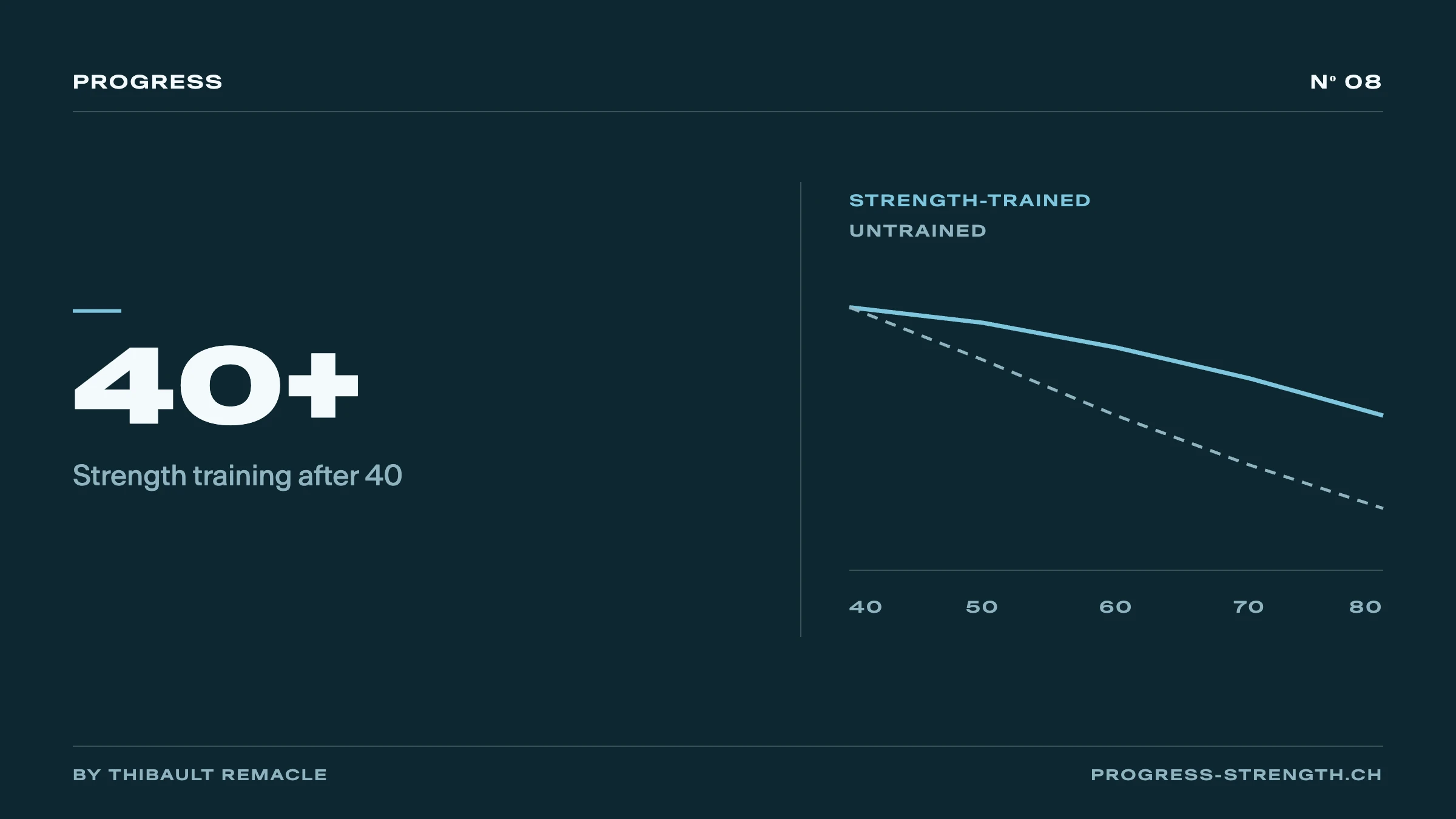
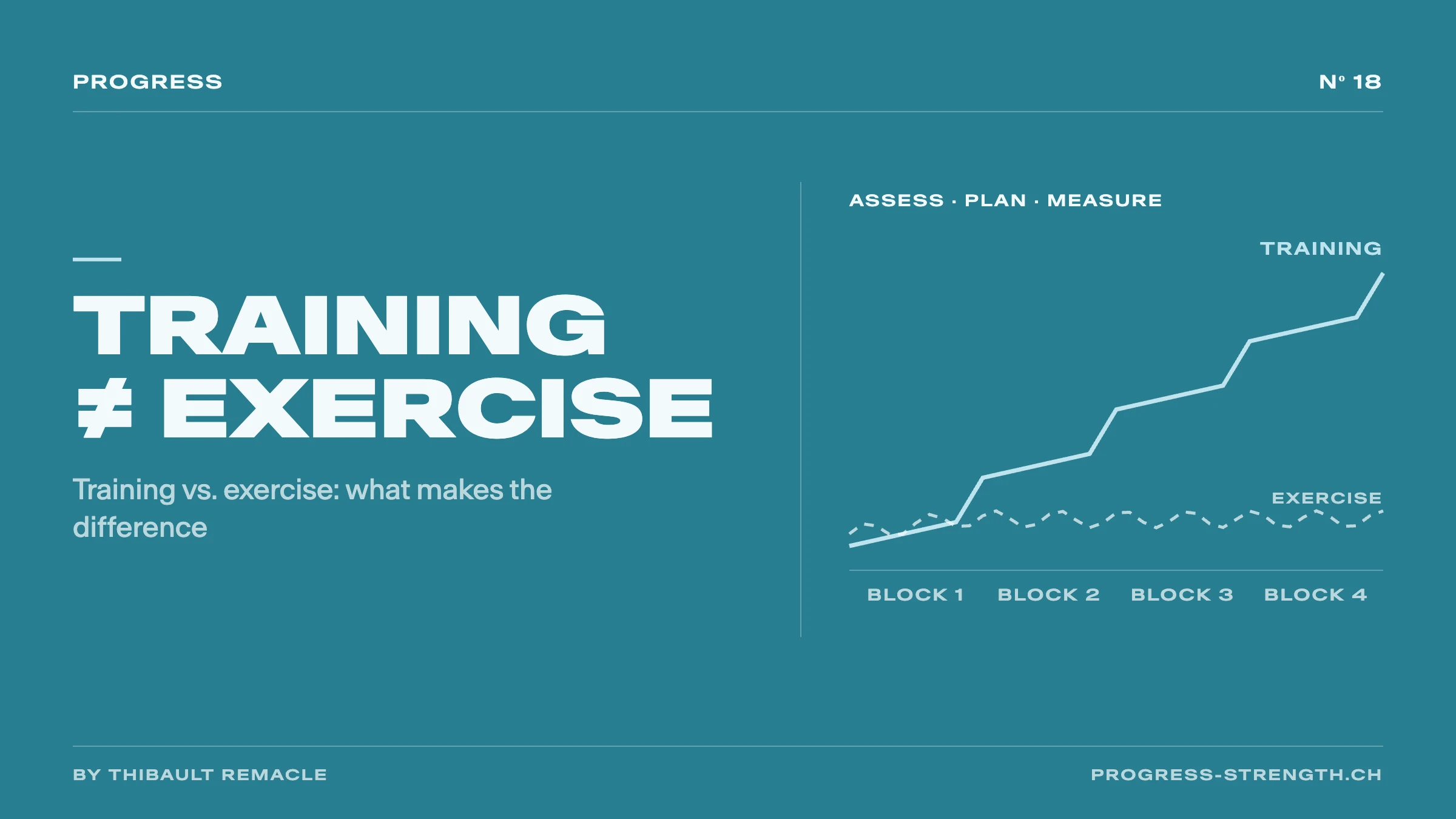
At 25, you can train badly and still look fine. At 45, the body stops forgiving. The good news: it still responds remarkably well to the right training. In fact, strength training matters more every year you get older.
What changes with age
- Muscle: from middle age, adults lose muscle mass progressively, often estimated at several percent per decade, and the loss accelerates after 60.
- Strength declines faster than muscle mass, and power, the ability to produce force quickly, declines fastest of all. That is what you need to catch yourself when you trip.
- Bone density falls, especially in women after menopause.
- Insulin sensitivity drops, making fat gain around the waist easier.
- Recovery takes longer.
None of this is a fixed destiny. Much of it is the result of doing less, not only of aging.
Why strength training is the answer
Strength training is the most effective tool we have against muscle and strength loss. It also improves insulin sensitivity, supports bone and protects joints by strengthening the tissues around them. Large studies consistently link higher muscular strength, even something as simple as grip strength, with lower risk of death from all causes.
For bone, the LIFTMOR trial showed that supervised, heavy strength training improved bone density in postmenopausal women with low bone mass, safely. Light exercise did not do the same.
It is never too late
In a classic study, frail adults in their nineties more than doubled their strength in eight weeks of strength training. If it works at 90, it works at 45.
How to train after 40
- Keep lifting heavy enough. Light weights for many reps are not enough to protect muscle and bone. Progressive loading still matters most.
- Warm up longer. Ten minutes, then a few lighter sets of the first exercise.
- Choose joint-friendly variations when needed: different bars, grips or ranges of motion that let you train hard without pain.
- Train power, safely: fast intention on the lifting phase, controlled jumps or throws if appropriate.
- Respect recovery: two to four sessions a week is usually ideal, with sleep and protein to match.
- Eat enough protein: older muscles need more per meal to respond, around 0.4 g per kg of body weight.
What to avoid
- Starting too hard after years off. Tendons adapt more slowly than muscles.
- Only doing cardio. Good for the heart, not enough for muscle and bone.
- Ignoring pain. Persistent pain deserves an assessment, not a painkiller and more of the same.
The bottom line
After 40, strength training is no longer about looking good on the beach. It is about staying strong, independent and healthy for the next 40 years. It is never too late to start, and that is exactly what we build at Progress.