Protein is the nutrient everyone talks about and few people get right. Some eat far too little without realizing it. Others drink three shakes a day for no reason. Here is what the research supports.
Training breaks muscle protein down. Eating protein provides the amino acids to rebuild it, a little stronger each time. Without enough protein, the training signal is there but the building material is missing. Protein also keeps you fuller than carbohydrates or fat, which makes it your best ally in a diet.
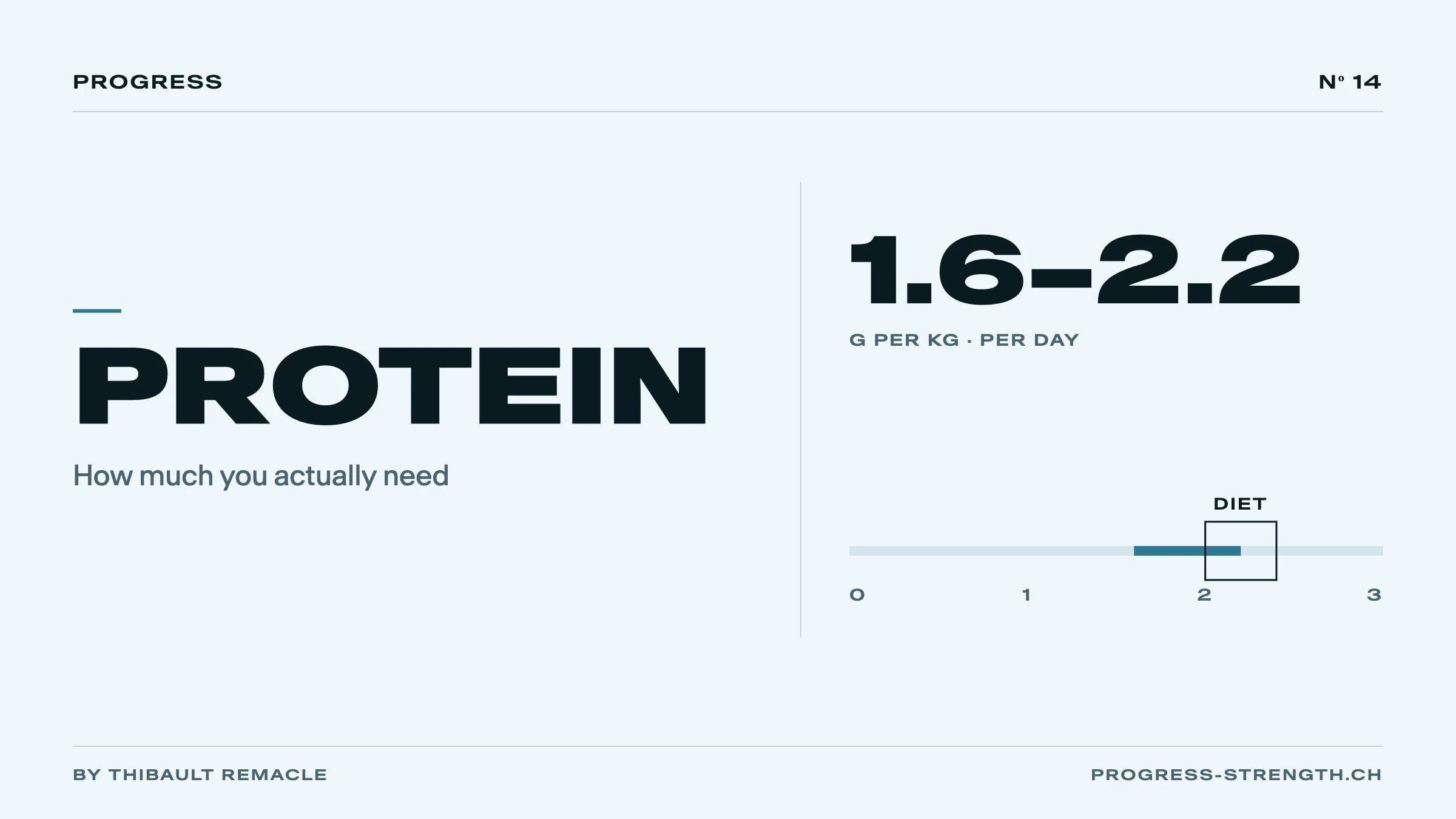
The largest analysis on the topic, a 2018 meta-analysis of 49 trials published in the British Journal of Sports Medicine, found that gains in muscle mass with training plateau at around 1.6 g of protein per kg of body weight per day. Some people benefit from more, up to about 2.2 g/kg.
For a 75 kg person, that means roughly 120 to 165 g per day.
With significant body fat, base the calculation on your target body weight rather than your current weight.
Total daily intake matters most. Distribution comes second, but it still helps. A practical target is three to four meals with around 0.4 g/kg each: about 30 to 45 g of protein for most people.
Recent research shows the body can use a large protein meal over a longer period than once thought, so a missed meal is not a disaster. But spreading protein out makes the daily target much easier to reach.
Animal proteins (meat, fish, eggs, dairy) are rich in leucine, the amino acid that triggers muscle building, and are easy to digest. Plant proteins work too: combine sources (legumes, grains, soy) and aim slightly higher in total. A protein powder is not necessary, just convenient when whole food is impractical.
Aim for 1.6 to 2.2 g per kg per day, more when dieting or over 50, spread over three or four meals with quality sources. Simple, measurable, and one of the biggest levers you have. Your exact target is part of every nutrition consultation at Progress.
Periodized programming and evidence-based nutrition, one-to-one in Lausanne or online.
Book a discovery call