Every week someone asks me which supplement will boost their testosterone. My answer is always the same question: how much do you sleep, and what is your body fat?
Most men don't need a booster. They need to stop doing the things that suppress it. Fix those, and testosterone usually takes care of itself. Skip them, and no capsule will save you.
Low energy, poor recovery and low libido have many causes. Before changing anything, get a blood test. Morning, fasted, ideally on a normal day, not after a sleepless night or a brutal session.
If the numbers come back clearly low, the next step is a doctor, not a coach. Hormone therapy is medicine. My job is everything that comes before it, and that is usually where the problem is.
Most of your daily testosterone is released during sleep. Cut sleep short and you cut production.
In a well-known University of Chicago study, healthy young men restricted to five hours of sleep per night for one week saw their daytime testosterone drop by 10 to 15%. One week. Many executives I work with have been living like that for years.
Seven to nine hours, consistent bedtime, dark and cool room. Unglamorous, and more effective than anything you can buy.
Fat tissue contains aromatase, the enzyme that converts testosterone into estrogen. The more body fat, the more conversion, and the lower the testosterone. Losing fat is one of the most reliable ways to raise it. For many men above 20% body fat, this is the single biggest lever.
Strength training is excellent for body composition, insulin sensitivity and long-term health, which all support healthy testosterone.
But forget the idea that heavy squats "spike" your testosterone into growth. The rise after a session is small and short-lived, and research from McMaster University found it does not predict how much muscle or strength you gain.
What does hurt testosterone is chronic overreaching: high training volume, poor sleep and a big calorie deficit at the same time. More is not always better.
Long, aggressive diets lower testosterone. So do very low-fat diets. If you diet, do it in phases with breaks, and keep healthy fats in.
Zinc, magnesium and vitamin D matter, but mostly when you are deficient. Correcting a deficiency can raise testosterone. Adding more on top of normal levels does little. In Switzerland, low vitamin D in winter is extremely common, which is exactly why it belongs in the blood test.
Regular drinking suppresses testosterone. A few glasses at the weekend is not the issue; three or four evenings a week is. Chronic stress works the same way: high cortisol for months does not go well with high testosterone. Walks, daylight, breathing work and better boundaries with your phone are not soft advice here.
And no, cold showers and sauna won't raise your testosterone. Sauna has real cardiovascular benefits, but that is another article.
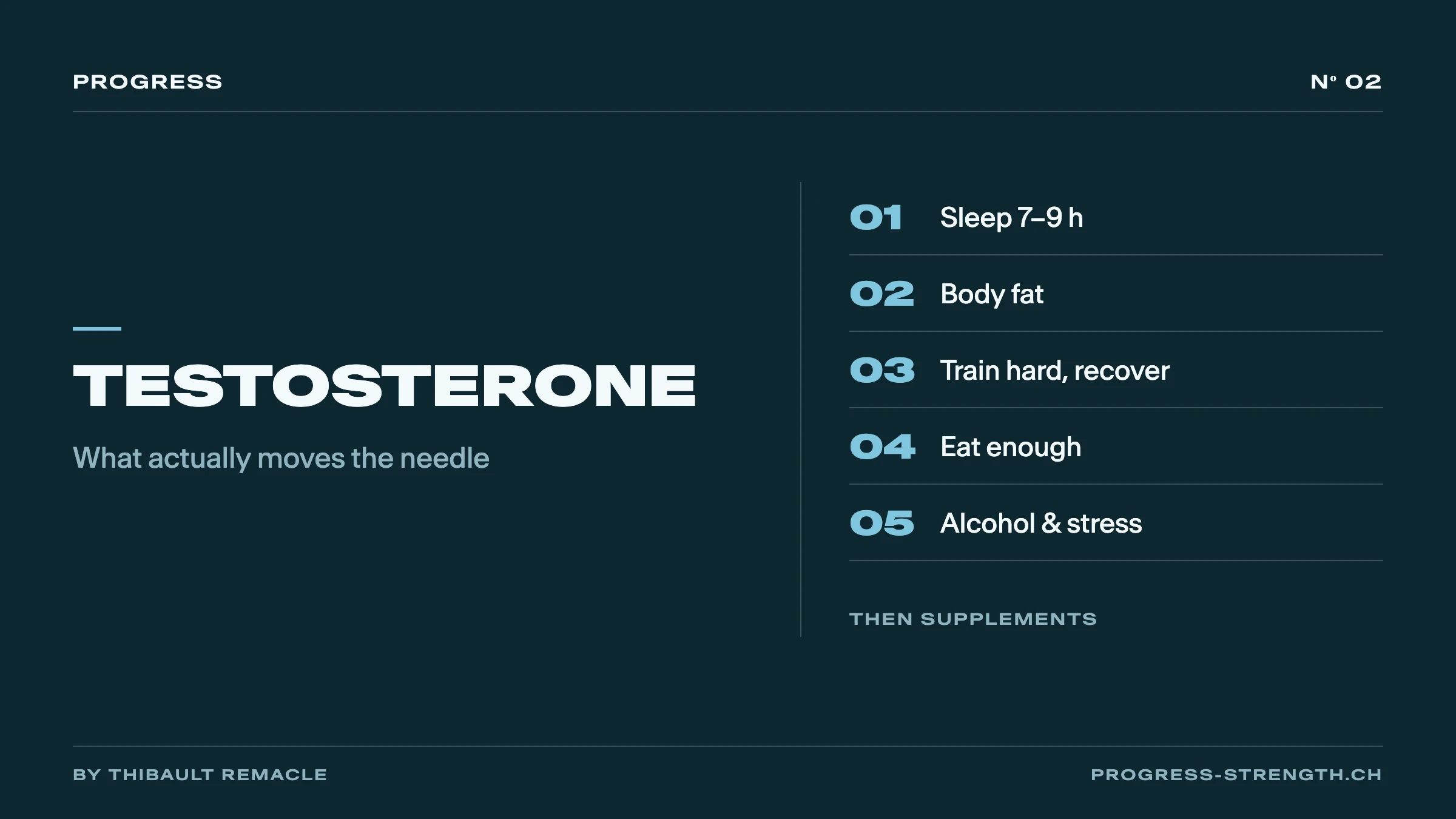
Testing first. Then sleep, body fat, food, alcohol and stress. Supplements last. That order is not exciting, but it is the one that works.
Hormones, blood work and lifestyle are part of every nutrition consultation at Progress. If you want to know where you actually stand, that is where we start.
A first meeting at the gym or via Zoom to discuss your goals and see if we’re the right fit.