Few supplements have a better reputation than omega-3. Heart health, muscle, brain, joints, mood: the list keeps growing. The research is more nuanced. Here is what holds up.
The two omega-3 fats that matter most are EPA and DHA. They are built into the membranes of every cell, especially in the brain, the eyes and the heart. Your body makes very little of them from plant sources like flax or walnuts, so the main sources are fatty fish (salmon, sardines, mackerel, herring) and supplements made from fish or algae.
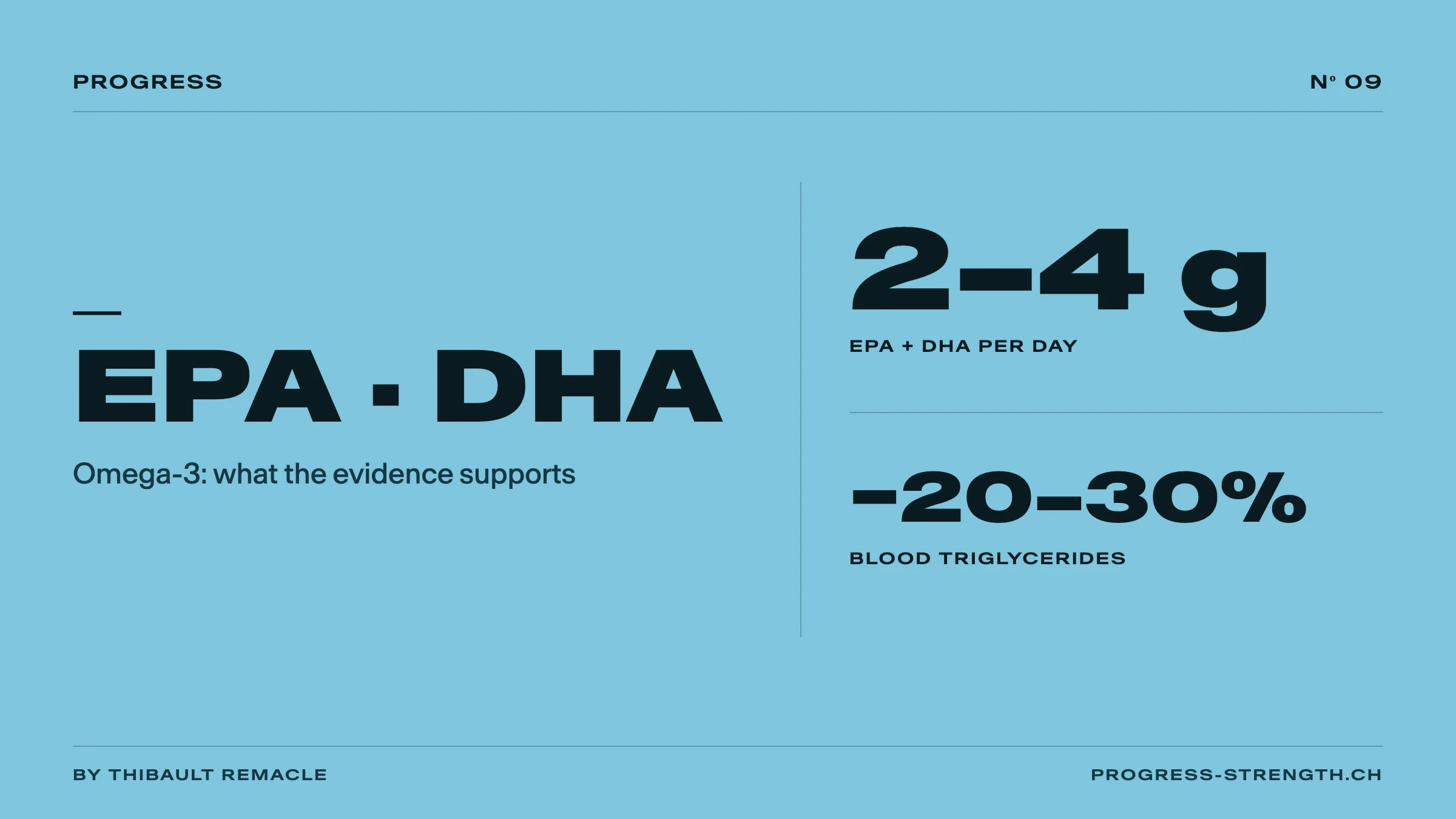
The large trials did not tell one simple story. In VITAL, 1 g per day did not significantly reduce major cardiovascular events in the general population. REDUCE-IT, using 4 g per day of a purified EPA, found a 25% reduction in events in high-risk patients, but its mineral oil placebo has been debated. STRENGTH, with a similar dose of a different omega-3 formulation, found no benefit.
There is also a downside: meta-analyses show that doses above about 1 g per day are associated with a higher risk of atrial fibrillation, an irregular heart rhythm. More is not always better.
Effects on muscle in young, well-fed lifters are small and inconsistent. The most interesting data come from older adults: in one trial, people aged 60 to 85 taking about 4 g per day for six months gained more muscle volume and strength than the placebo group. Promising, but not a reason to replace training or protein.
DHA is essential for brain structure. For mood, some meta-analyses suggest a modest benefit of EPA-rich formulas in depression, alongside treatment, not instead of it. For memory in healthy people, the evidence is weak.
The omega-3 index measures the share of EPA and DHA in your red blood cells. An index of 8% or more is generally considered a good target, and below 4% is low. It is a simple blood test and tells you whether you need a supplement at all.
Omega-3 is useful, not miraculous. If you rarely eat fatty fish, a quality supplement of 1 to 2 g per day makes sense. High doses belong under medical supervision. And the omega-3 index tells you where you stand. It is one of the markers we look at in nutrition consultations at Progress.
Periodized programming and evidence-based nutrition, one-to-one in Lausanne or online.
Book a discovery call