Calories are not everything, but they decide whether you gain or lose weight. The problem is not counting. The problem is counting badly, or counting forever. Here is how to use calories as a tool and then put the tool down.
Online calculators estimate your maintenance from age, height, weight and activity. They are useful, and often wrong by 10 to 20% for an individual. Your real maintenance comes from your own data.
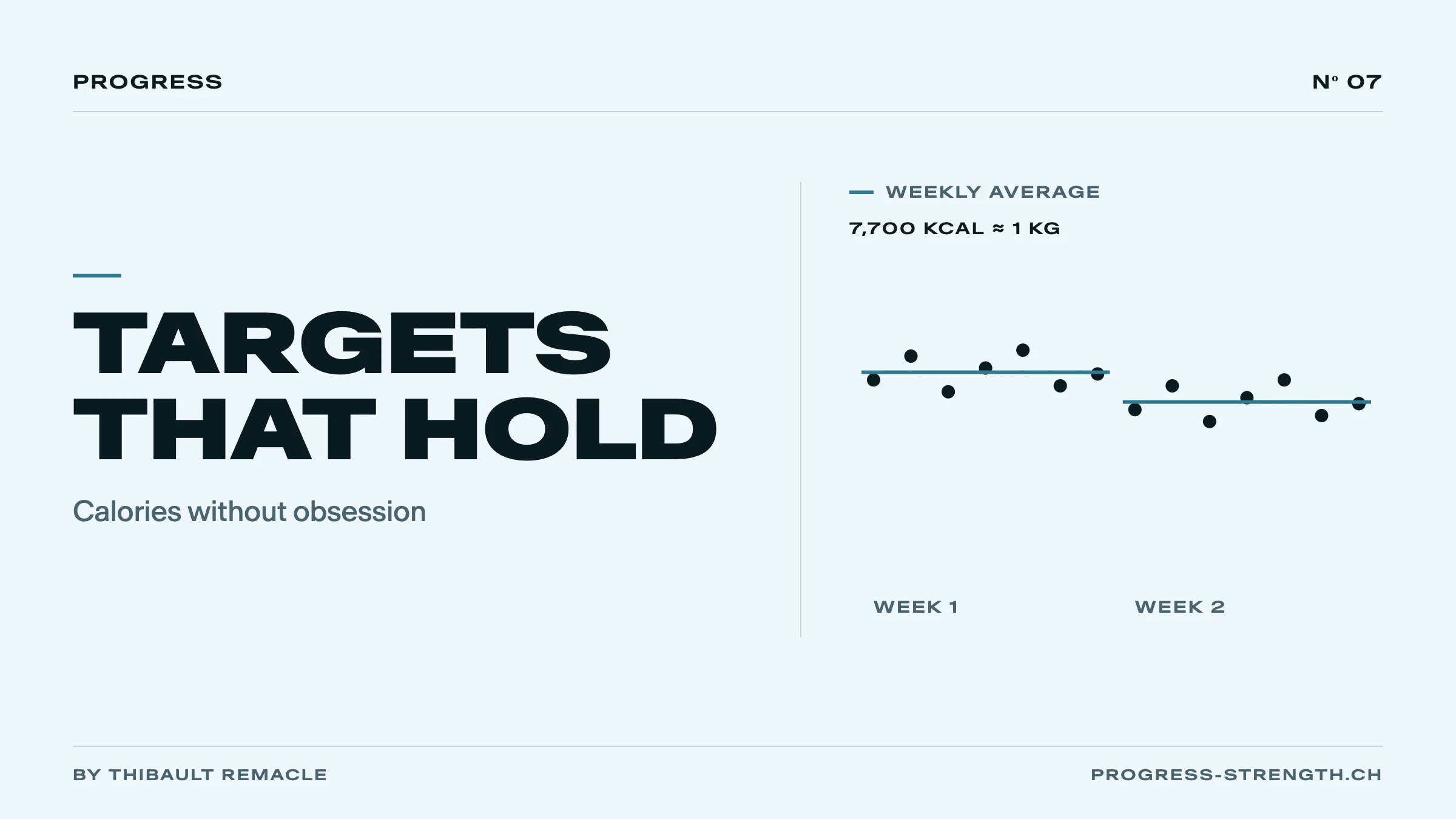
For two weeks, eat normally and log everything as honestly as you can. Weigh yourself every morning, after the bathroom, before eating. Then compare the average weight of week one with week two:
Always compare weekly averages, never single days. Water, salt, carbohydrates and digestion can move the scale by one to two kilos overnight.
Adjust every two to three weeks based on the trend, by about 100 to 200 kcal at a time. Small changes, given time to work.
Two diets with the same calories can feel completely different. Protein first at every meal, plenty of vegetables, whole foods most of the time. You feel fuller, recover better and the number becomes much easier to hit.
Tracking is a learning phase, not a life sentence. After a few weeks, most people can estimate portions well. Then switch to simpler tools:
If the trend drifts, track again for a week. That is all.
Calories are the steering wheel, not the destination. Find your real numbers, set a realistic pace, then move to habits that hold without counting. That is how nutrition works at Progress: precise at the start, simple for the long term.
Periodized programming and evidence-based nutrition, one-to-one in Lausanne or online.
Book a discovery call