Losing fat and building muscle at the same time sounds like a contradiction. Building muscle needs energy, losing fat needs a deficit. Yet it happens every day, and it is the goal of most of my clients. The question is who can do it, and how.
Research reviews show recomposition is most likely in four groups:
For a lean, advanced lifter, recomposition is slow. Separate phases of building and cutting usually work better.
Training is the signal that tells your body to keep and build muscle while you lose fat. That means lifting heavy enough, with progressive overload, on a structured program. Endless cardio and circuit classes burn calories, but they do not give the same signal. Cardio is a useful addition, not the base.
Protein is the building material, and it protects muscle in a deficit. Aim for around 2.0 to 2.4 g per kg of target body weight per day, spread across three to four meals.
A large deficit drives fast weight loss, and a good part of it comes from muscle. For recomposition, a moderate deficit of about 10 to 20% below maintenance works better. Beginners with more body fat can even recompose at maintenance. The slower the loss, the more muscle you keep.
In a well-known study, dieters sleeping 5.5 hours instead of 8.5 hours lost the same weight, but much less of it was fat and more of it was muscle. Recovery is not a bonus. It decides what the weight you lose is made of.
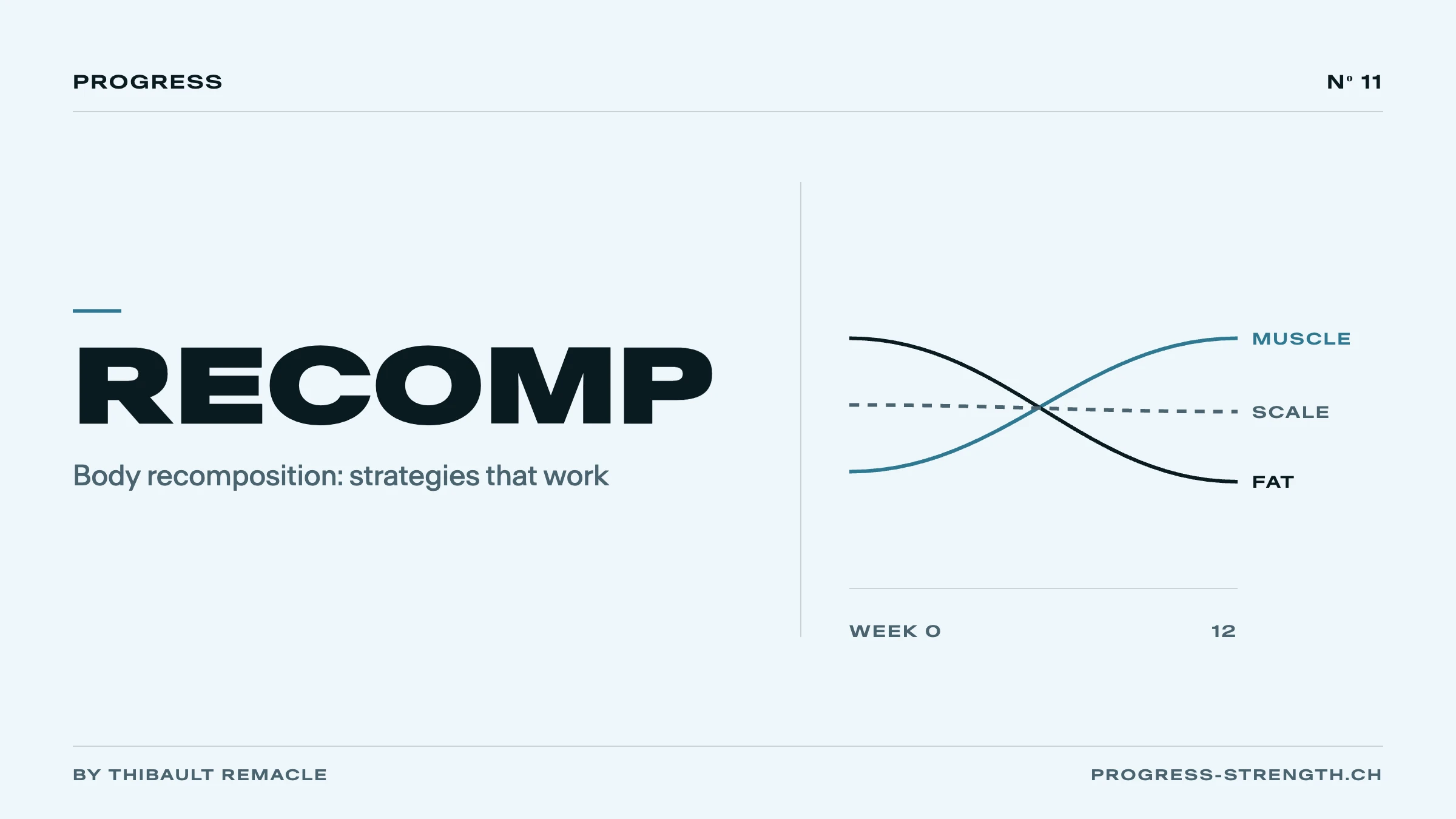
During recomposition, the scale can stay almost flat for weeks while your body changes. If you only watch body weight, you will think it is not working. Track instead:
Recomposition is slower than a classic diet on the scale, and faster in the mirror. Expect visible changes in 8 to 12 weeks, not in 8 to 12 days. The people who get the best results are rarely the most extreme. They are the most consistent.
Strength training as the signal, high protein as the material, a small deficit as the fuel, sleep as the recovery, and the right measurements to see it happen. That is the formula behind most transformations at Progress.
Periodized programming and evidence-based nutrition, one-to-one in Lausanne or online.
Book a discovery call